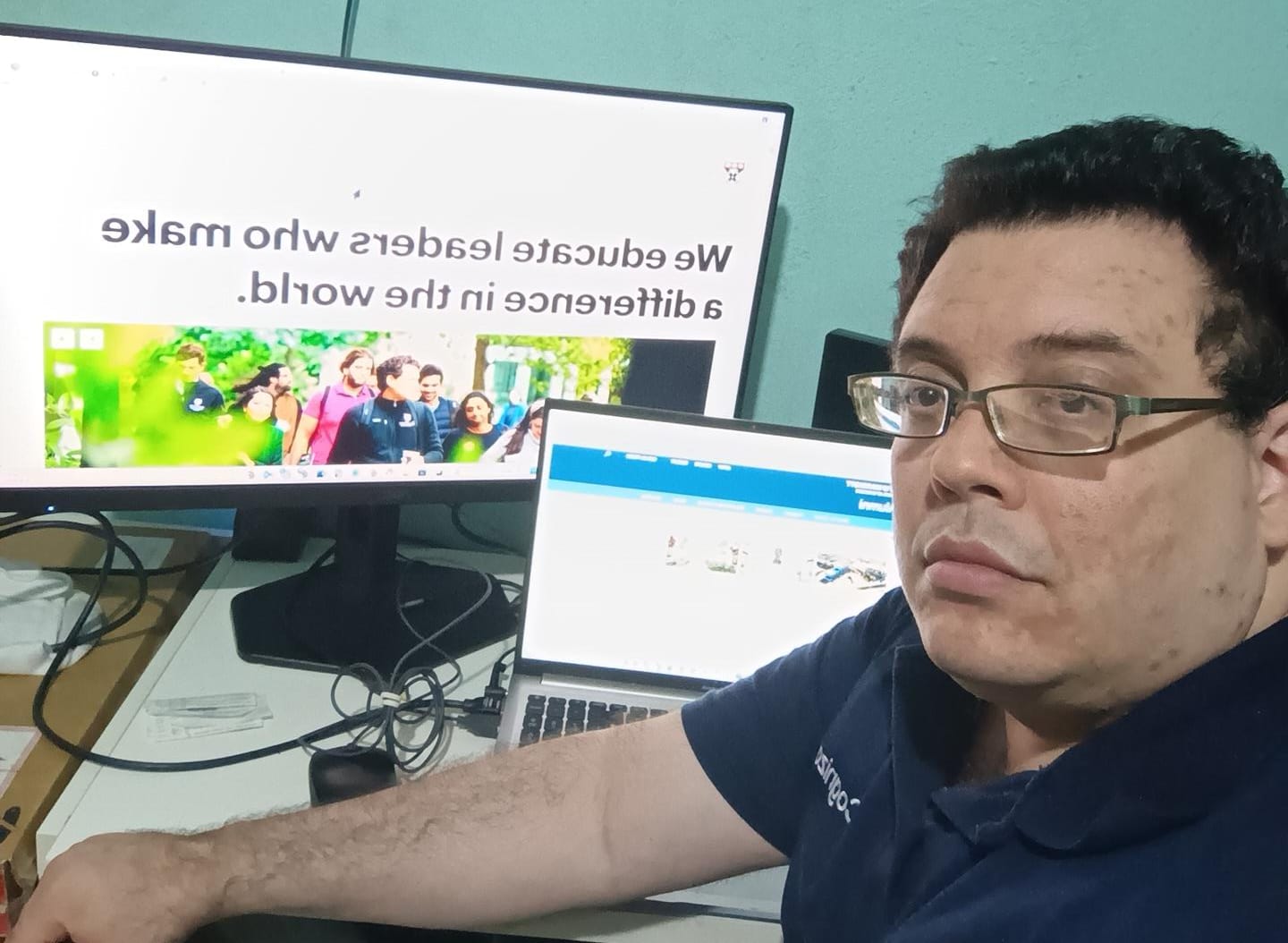
Samuel Chacón
Software Development Student
📍 Venezuela | Aspiring Full-Stack Developer
Taking Advanced Business Management to strengthen my entrepreneurial mindset for my second degree in Business starting January 2026
Taking Advanced Business Management to strengthen my entrepreneurial mindset for my second degree in Business starting January 2026
I'm a Venezuelan software development student who has just completed all credits for my current program. Rather than waiting, I'm leveraging this time to take BUS 410 - Principles of Advanced Business Management to build essential business acumen for my entrepreneurial goals. This strategic decision aligns with my plan to start a second degree in Business Administration in January 2026.
My dual focus on technology and business reflects my vision: to become a tech entrepreneur who understands both the development and business sides of creating innovative solutions.
While most people might assume a software developer pursues only technical degrees, I'm actively taking a business management course and planning a full business degree. What might surprise you is that I view programming and business as complementary skills, not competing interests.
I've seen countless brilliant developers fail in business because they couldn't understand market dynamics, financial management, or organizational strategy. Conversely, I've met business leaders who lack technical literacy and miss critical opportunities. I'm intentionally building both skill sets because I believe the future belongs to tech-savvy business leaders and business-minded technologists.
My "surprise factor": I'm not just coding to code—I'm coding to understand how to build sustainable, profitable, and impactful technology businesses.
Dollar General's success through 2005 was built on several key factors:
The company opened over 700 stores annually, demonstrating extraordinary market confidence and execution capability. This aggressive expansion was profitable during the growth phase.
Sales growth reached +12.0% in 2005, with consistent double-digit expansion throughout the period, indicating strong market demand for the low-cost retail model.
Gross margin peaked at 29.5% in 2004 and remained high at 29.4% in 2005, showing the company's ability to source products efficiently and maintain pricing power.
Operating margins of 7.0% in 2004-2005 demonstrated operational excellence and the scalability of their business model—rare for discount retailers.
Asset-to-Sales ratios of approximately 34% showed the company generated strong sales with relatively lean asset investments, maximizing return on assets.
The "low-cost, high-convenience" model filled a market gap between Walmart's scale and Family Dollar's presence, creating a unique competitive advantage in underserved communities.
Between 2005 and 2007, Dollar General encountered severe challenges that nearly destroyed the company's profitability:
Operating margin collapsed from 6.5% in 2005 to just 2.7% in 2006—a devastating -59.5% decline in pre-tax income. This signals fundamental operational problems.
Gross margin dropped from 29.4% to 25.8%, indicating either poor supplier relationships, excessive inventory markdowns, or product mix deterioration—all suggesting operational mismanagement.
Sales growth slowed from +12.0% to +6.8%, with same-store sales stagnating at 2-3% versus the historical 5-8% benchmark. This indicates new stores were underperforming.
Back rooms were "overflowing with product" due to a failing pack-away strategy. Inventory turnover remained weak at 4.7, below peer benchmarks, suggesting obsolete or slow-moving merchandise consuming capital.
The case documents inadequate back-office space, poor floor plan adherence, and restocking delays. This created a chaotic retail environment that frustrated customers and damaged brand perception.
Over 700 stores opened annually, but operations only existed in fewer than 30 U.S. states. The company expanded faster than its support infrastructure could handle—a classic case of growth outpacing operational capacity.
This case brilliantly illustrates a fundamental business principle: sustainable growth requires operational excellence to precede or accompany expansion. Dollar General's mistake wasn't being ambitious—it was being operationally unprepared for that ambition. The company learned that scale without efficiency is merely expensive failure at a larger magnitude.
I'm eager to engage with classmates on business strategy, technology trends, and case analysis. Please feel free to comment on my insights regarding Dollar General, and I'd love to read and respond to your perspectives as well.
Looking forward to this semester! 🚀